Skip linksSkip to Content
play
Live
Navigation menu
  • News
    • Africa
    • Asia
    • US & Canada
    • Latin America
    • Europe
    • Asia Pacific
  • Middle East
  • Explained
  • Opinion
  • Sport
  • Video
    • Features
    • Economy
    • Human Rights
    • Climate Crisis
    • Investigations
    • Interactives
    • In Pictures
    • Science & Technology
    • Podcasts
    • Travel
play
Live

In Pictures

Gallery

Ladakh: Life on India’s northern frontiers

The mountainous region, bordered by Pakistan and China, is one of the last remaining homes of South Asian Buddhism.
Save

Share

facebooktwitterwhatsappcopylink
1.jpg
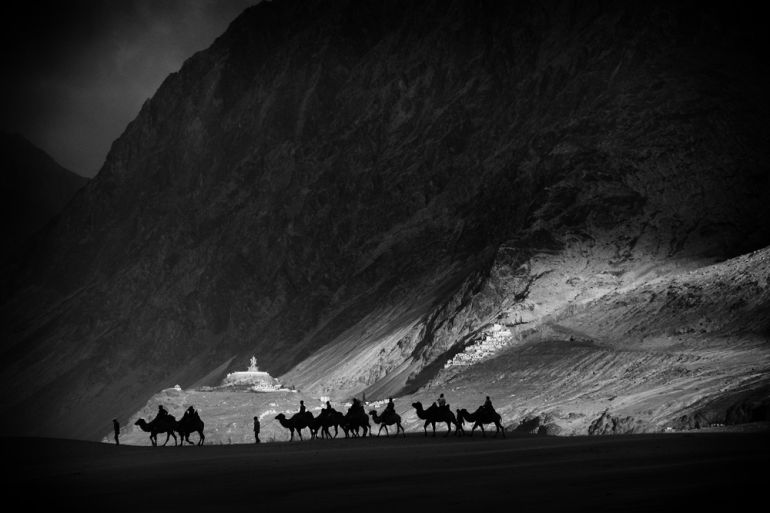
Camels walk across white sand dunes with the Diskit Monastery, the oldest and largest Buddhist monastery in Nubra Valley, in the distance. Nearby is the Siachen Glacier, over which both India and Pakistan claim sovereignty.
By Arko Datto
Published On 5 Jul 20135 Jul 2013

Ladakh, nestled in the northernmost realms of India between the Kunlun and Himalaya mountain ranges, is one of the last remaining strongholds of Buddhism in South Asia.

While most Ladakhis practice Tibetan Buddhism, a minority of Shia Muslims also live in the region. Although Ladakh is administratively part of India’s state of Jammu and Kashmir, Ladakh is culturally and religiously separate, leading some to call for it to be an entirely separate territory.

Buddhism has been practiced in Ladakh for almost two millenia. Many Tibetan refugees who fled Chinese persecution have made neighbouring Ladakh their home, reinforcing the predominantly Buddhist traditions in the region.

India claims the disputed region of Aksai Chin to be a part of Ladakh, though it is de facto administered by China as part of the Xinjiang Automomous Region. The region has been in the news in recent months after reports that Chinese soldiers made an incursion into the disputed border area.
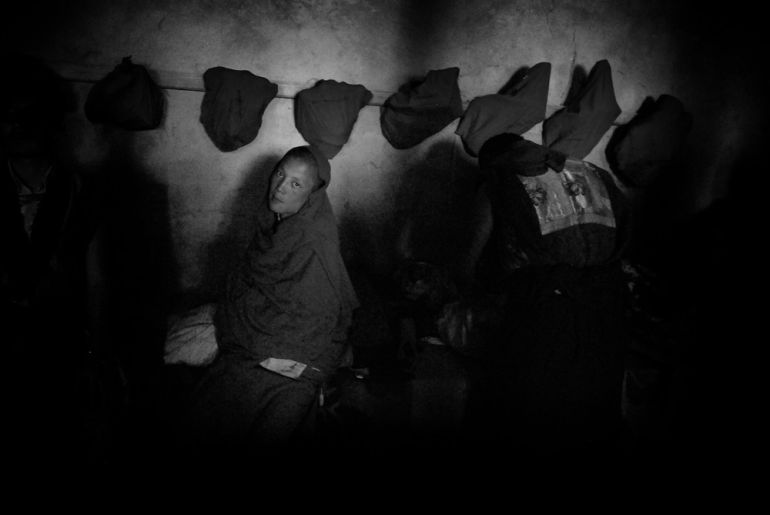
2.jpg
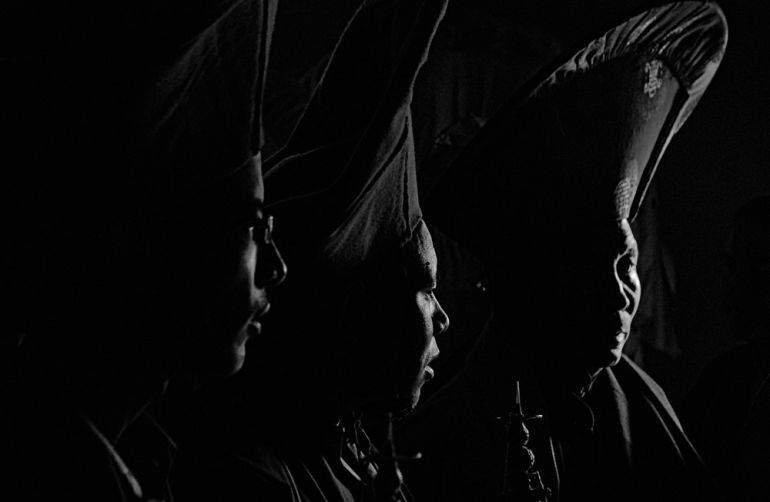
Monks at a monastery in Chamthang in eastern Ladakh.
Advertisement
3.jpg
The disputed Line of Actual Control, a 4,000km border India shares with China, is a mere half hour away from the Shachukul Monastery.
4.jpg
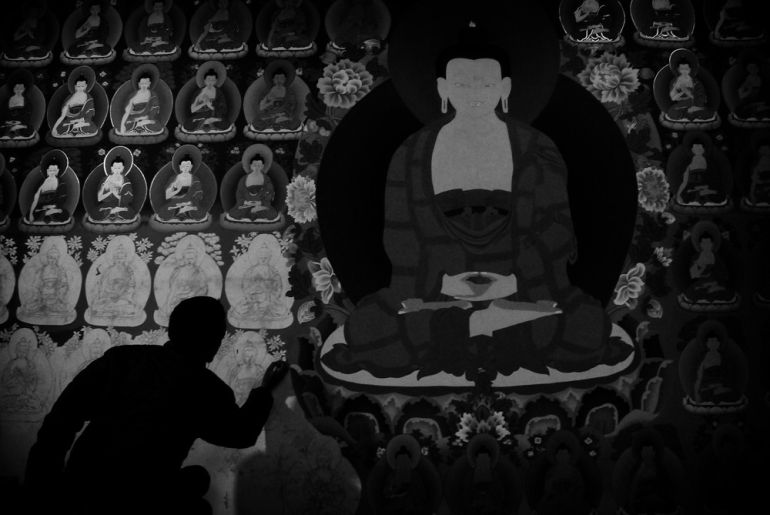
Wall decorations in the Hemis Monastery, re-established in Ladakh in 1672.
5.jpg
Young monks in Chumathang, near the region of Aksai Chin, which is disputed by China and India.
7.jpg
Buddhist prayer flags are raised over Leh, Ladakh, an area where a considerable number of Tibetans fleeing Chinese persecution have found refuge in India.
8.jpg
Festival dancers prepare to perform unique dances that focus on the victory over evil at the Shachukul Monastery.
Advertisement
9.jpg
People participate in the mask dance festival, which celebrates the victory of good over evil, at Shachukul Gustor. 
11.jpg
The mask dance festival is attended by young spectators each year.
14.jpg
Monks run for shelter upon the outbreak of a sudden windstorm in Chumathang, Ladakh.
15.jpg
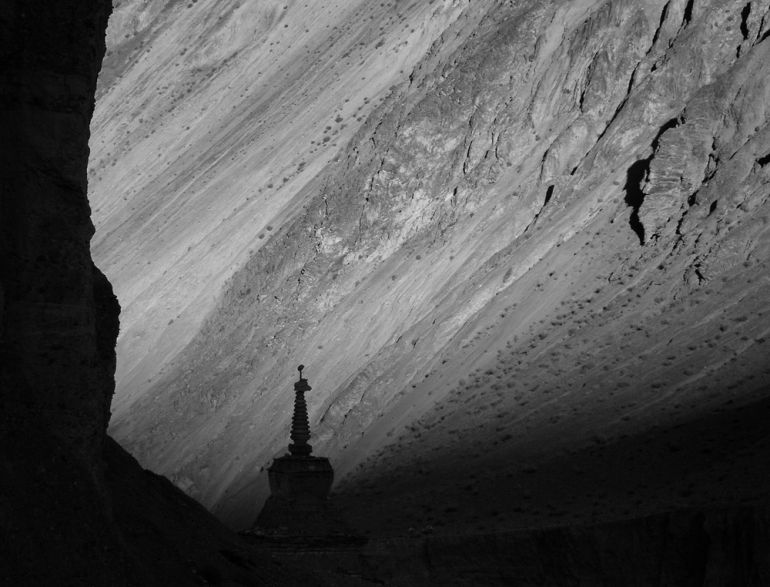
A chorten, or stupa, in Mulbekh, a region marking the frontier between Buddhist Ladakh and predominantly Muslim Kashmir.

More from Gallery

  • Photos: Manila’s streets empty as fuel prices surge amid Hormuz crisis

    A sharp increase in prices of basic commodities and the possible loss of employment for thousands of people due to the fuel price hike have raised the spectre of stagflation in the Philippines.
    This gallery article has 10 imagescamera10
  • Photos: More than one million displaced by Israel’s evacuations in Lebanon

    Over one million displaced by Israel’s evacuations in Lebanon
    This gallery article has 10 imagescamera10
  • Migrants march in southern Mexico to denounce immigration restrictions

    Migrants, some carrying children, walk on the highway through the municipality of Huehuetan, Chiapas state, Mexico, Wednesday, March 25, 2026, after leaving Tapachula the previous night. (AP Photo/Edgar H. Clemente)
    This gallery article has 9 imagescamera9
  • Photos: Iran fires new waves of missiles at Israel

    This picture shows damaged buildings at the site of an Iranian missile strike in Tel Aviv
    This gallery article has 8 imagescamera8

Most popular

  • Iran targets Saudi capital, hits Kuwait port as Middle East tensions surge

    TOPSHOT - This video grab taken from images released by the Iranian state broadcaster (IRIB) on March 26, 2026, shows what it says is the second phase of the 82nd wave of missiles launched against Israel and US bases in the United Arab Emirates and Kuwait.
  • How extensive is Russia’s military aid to Iran?

    Iranian missile strikes
  • US-Israel war on Iran: What’s happening on day 28 of attacks?

    Protesters attend a rally.
  • Iran war updates: US, Israel attack ignites worst trade rupture in 80 years

    This handout image taken by the European Space Agency (ESA) captured by the Copernicus Sentinel-2 satellite shows a view of smoke plumes billowing in the vicinity Kuwait International Airport on March 25, 2026.

  • About

    • About Us
    • Code of Ethics
    • Terms and Conditions
    • EU/EEA Regulatory Notice
    • Privacy Policy
    • Cookie Policy
    • Cookie Preferences
    • Accessibility Statement
    • Sitemap
    • Work for us
  • Connect

    • Contact Us
    • User Accounts Help
    • Advertise with us
    • Stay Connected
    • Newsletters
    • Channel Finder
    • TV Schedule
    • Podcasts
    • Submit a Tip
    • Paid Partner Content
  • Our Channels

    • Al Jazeera Arabic
    • Al Jazeera English
    • Al Jazeera Investigative Unit
    • Al Jazeera Mubasher
    • Al Jazeera Documentary
    • Al Jazeera Balkans
    • AJ+
  • Our Network

    • Al Jazeera Centre for Studies
    • Al Jazeera Media Institute
    • Learn Arabic
    • Al Jazeera Centre for Public Liberties & Human Rights
    • Al Jazeera Forum
    • Al Jazeera Hotel Partners

Follow Al Jazeera English:

  • facebook
  • twitter
  • youtube
  • instagram-colored-outline
  • rss
Al Jazeera Media Network logo
© 2026 Al Jazeera Media Network