Skip linksSkip to Content
play
Live
Navigation menu
  • News
    • Africa
    • Asia
    • US & Canada
    • Latin America
    • Europe
    • Asia Pacific
  • Middle East
  • Explained
  • Opinion
  • Sport
  • Video
    • Features
    • Economy
    • Human Rights
    • Climate Crisis
    • Investigations
    • Interactives
    • In Pictures
    • Science & Technology
    • Podcasts
    • Travel
play
Live

In Pictures

Gallery|Health

Chained in Somaliland: Inadequate mental health system

With inadequate resources and lack of professional staff, Somaliland struggles to heal the mentally ill.
Save

Share

facebooktwitterwhatsappcopylink
Somaliland Mental health / DO NOT USE/ RESTRICTED
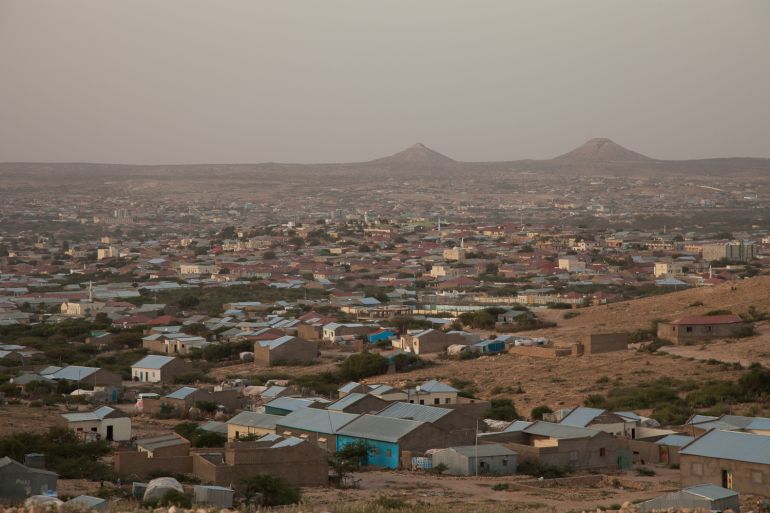
View across Hargeisa, the capital of the breakaway northern region of Somalia. [Zoe Flood/Al Jazeera]
By Zoe Flood
Published On 4 Nov 20154 Nov 2015

Hargeisa, Somaliland – Abdirisak Mohamed Warsame is one of just a handful of professionals working to improve the lives of people suffering from mental health problems in the Horn of Africa country, people who are largely neglected and often abused. 

“Mental health is an abandoned field in Somaliland,” Warsame said.

There is no official data on the prevalence of mental health conditions in Somaliland but research points to high levels caused by – among other factors – the violence of the ongoing civil war, the widespread use of the stimulant khat, entrenched unemployment, and the lack of health services. 

Some families, who often don’t understand the condition of their relatives, admit relatives to one of a small number of under-resourced public and private mental health facilities.

But in most centres, there are few or no professional staff who understand how to care for those with mental health conditions.

Chaining of patients is widespread – only the mental health ward at the Hargeisa Group Hospital is currently chain-free – and psychotropic drugs are often unavailable.

Somaliland Mental health / DO NOT USE/ RESTRICTED
A man stands outside the mental health ward of the Hargeisa Group Hospital in the Somaliland capital, which is estimated to host around 65 male and female inpatients. [Zoe Flood/Al Jazeera]
Advertisement
Somaliland Mental health / DO NOT USE/ RESTRICTED
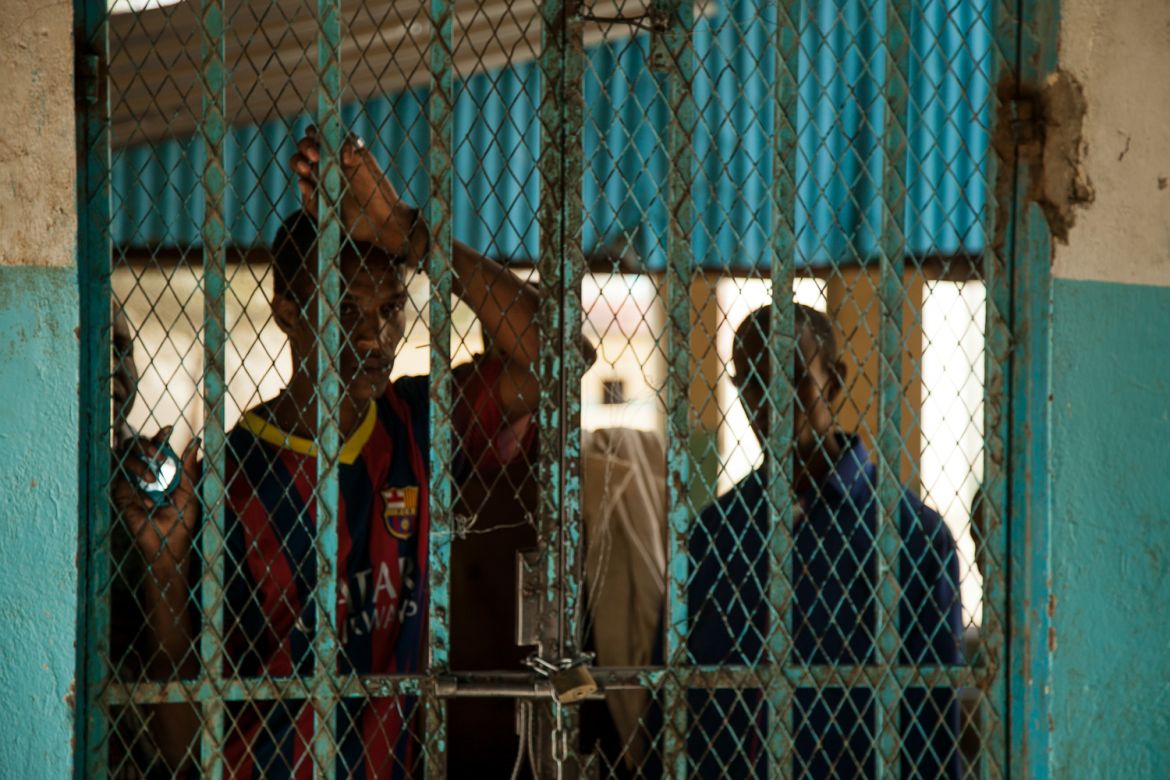
A female patient reaches out through the bars at the entrance of the Hargeisa Group Hospital's mental health ward. This ward is one of four under-resourced and dilapidated public mental health facilities across Somaliland. In response to demand, expensive and under-regulated private centres are springing up across the capital Hargeisa. [Zoe Flood/Al Jazeera]
Somaliland Mental health / DO NOT USE/ RESTRICTED
A patient looks out through the bars at the front of the mental health ward at the Hargeisa Group Hospital. Patients are kept locked in the ward, although they are allowed to move freely within the separate male and female sections of the facility. [Zoe Flood/Al Jazeera]
Somaliland Mental health / DO NOT USE/ RESTRICTED
According to a Human Rights Watch investigation both public and private mental health facilities in Somaliland largely serve as places of confinement, and subject many residents to involuntary treatment and unlawful detention. [Zoe Flood/Al Jazeera]
Somaliland Mental health / DO NOT USE/ RESTRICTED
Maryam Hassan Dahir, nurse at the Hargeisa Group Hospital mental health ward, hands out medication to patients. There are two qualified psychiatric doctors in Somaliland for an estimated population of 3.5 million. [Zoe Flood/Al Jazeera]
Somaliland Mental health / DO NOT USE/ RESTRICTED
The male section of the mental health ward previously used chains to restrain patients for long periods of time, but is currently chain-free. [Zoe Flood/Al Jazeera]
Advertisement
Somaliland Mental health / DO NOT USE/ RESTRICTED
While the Hargeisa facility does run some activities for the patients, most spend their time almost completely inactive. [Zoe Flood/Al Jazeera]
Somaliland Mental health / DO NOT USE/ RESTRICTED
While there are some female patients at this public facility, most of the privately run centres only house men. [Zoe Flood/Al Jazeera]
Somaliland Mental health / DO NOT USE/ RESTRICTED
This man, who asked not to be named but usually lives in the Netherlands, was on a long visit to Somaliland when relatives placed him at the privately run Raywan centre in Hargeisa two months earlier. He could not clearly identify his condition. [Zoe Flood/Al Jazeera]
Somaliland Mental health / DO NOT USE/ RESTRICTED
Human Rights Watch found that most people with psychosocial disabilities have been placed in institutions against their will. [Zoe Flood/Al Jazeera]

Related

  • Examining mental health in Haiti

    Four years since the devastating earthquake, emotional and psychological damage inflicted on Haitians goes ignored.

    Published On 29 Mar 201429 Mar 2014
  • Mental health of a war-torn Somalia

    One in three Somalis suffers from mental illness, according to the World Health Organisation.

    Published On 3 Sep 20123 Sep 2012

More from Gallery

  • Photos: Manila’s streets empty as fuel prices surge amid Hormuz crisis

    A sharp increase in prices of basic commodities and the possible loss of employment for thousands of people due to the fuel price hike have raised the spectre of stagflation in the Philippines.
    This gallery article has 10 imagescamera10
  • Photos: More than one million displaced by Israel’s evacuations in Lebanon

    Over one million displaced by Israel’s evacuations in Lebanon
    This gallery article has 10 imagescamera10
  • Migrants march in southern Mexico to denounce immigration restrictions

    Migrants, some carrying children, walk on the highway through the municipality of Huehuetan, Chiapas state, Mexico, Wednesday, March 25, 2026, after leaving Tapachula the previous night. (AP Photo/Edgar H. Clemente)
    This gallery article has 9 imagescamera9
  • Photos: Iran fires new waves of missiles at Israel

    This picture shows damaged buildings at the site of an Iranian missile strike in Tel Aviv
    This gallery article has 8 imagescamera8

Most popular

  • Iran targets Saudi capital, hits Kuwait port as Middle East tensions surge

    TOPSHOT - This video grab taken from images released by the Iranian state broadcaster (IRIB) on March 26, 2026, shows what it says is the second phase of the 82nd wave of missiles launched against Israel and US bases in the United Arab Emirates and Kuwait.
  • How extensive is Russia’s military aid to Iran?

    Iranian missile strikes
  • Saudi, UAE, Iraq: Can three pipelines help oil escape Strait of Hormuz?

    TOPSHOT - Indian vessel 'Nanda Devi' carrying liquefied petroleum gas (LPG) arrives at Vadinar Port in the Jamnagar district of Gujarat state on March 17, 2026 after Iran allowed it to pass through the Strait of Hormuz, a key energy corridor that remains disrupted by the Middle East war.
  • ‘Raising 10 red flags’: Is Israel’s army exhausted?

    Israeli soldiers

  • About

    • About Us
    • Code of Ethics
    • Terms and Conditions
    • EU/EEA Regulatory Notice
    • Privacy Policy
    • Cookie Policy
    • Cookie Preferences
    • Accessibility Statement
    • Sitemap
    • Work for us
  • Connect

    • Contact Us
    • User Accounts Help
    • Advertise with us
    • Stay Connected
    • Newsletters
    • Channel Finder
    • TV Schedule
    • Podcasts
    • Submit a Tip
    • Paid Partner Content
  • Our Channels

    • Al Jazeera Arabic
    • Al Jazeera English
    • Al Jazeera Investigative Unit
    • Al Jazeera Mubasher
    • Al Jazeera Documentary
    • Al Jazeera Balkans
    • AJ+
  • Our Network

    • Al Jazeera Centre for Studies
    • Al Jazeera Media Institute
    • Learn Arabic
    • Al Jazeera Centre for Public Liberties & Human Rights
    • Al Jazeera Forum
    • Al Jazeera Hotel Partners

Follow Al Jazeera English:

  • facebook
  • twitter
  • youtube
  • instagram-colored-outline
  • rss
Al Jazeera Media Network logo
© 2026 Al Jazeera Media Network