Skip linksSkip to Content
play
Live
Navigation menu
  • News
    • Africa
    • Asia
    • US & Canada
    • Latin America
    • Europe
    • Asia Pacific
  • Middle East
  • Explained
  • Opinion
  • Sport
  • Video
    • Features
    • Economy
    • Human Rights
    • Climate Crisis
    • Investigations
    • Interactives
    • In Pictures
    • Science & Technology
    • Podcasts
    • Travel
play
Live

In Pictures

Gallery|Business and Economy

Illegal gold mining fuels violence in Colombia

Local miners say they feel caught between exploitative armed groups and a government crackdown on informal mining.
Save

Share

facebooktwitterwhatsappcopylink
Blood gold in Colombia/ Please Do Not Use
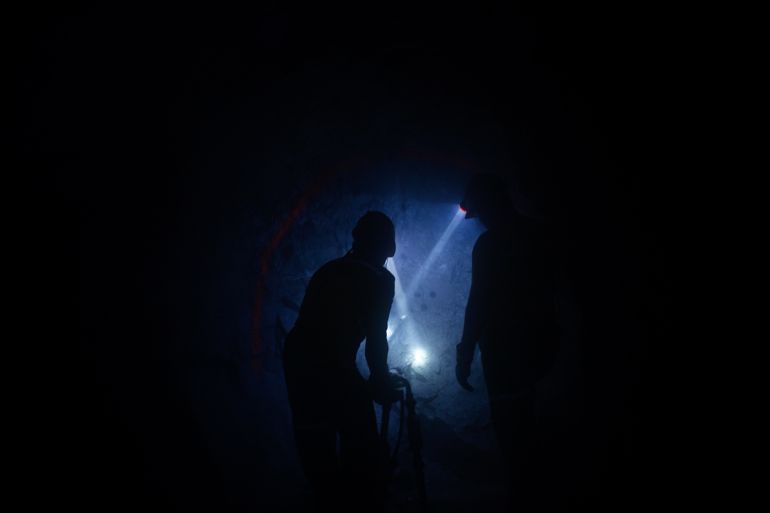
Colombian miners drill a vein of gold inside the Cogote mine. There are more than 700 miners working inside this mine. [Diego Ibarra Sanchez/MeMo/Al Jazeera]
By Diego Ibarra Sanchez
Published On 7 May 20177 May 2017

Antioquia, Colombia – Antioquia has been the heartland of the Colombian gold trade since colonial times, when Spanish conquerors came in search of the mythical El Dorado.

In the northeast of the province lies Segovia, a tiny township that for more than 400 years has produced gold, chiselled from the walls of thousands of underground tunnels.

Afro-descendant and indigenous Colombians have worked there as artisanal miners for decades, using the same techniques of their ancestors, whom the Spanish enslaved to mine the land.

Since the early 2000s, as the price of the precious metal has risen, the region has experienced a violent gold rush as leftist guerrillas, neo-paramilitary outfits and drug trafficking groups have established their presence to control mining operations. Illegally mined gold is fuelling violence as gold has overtaken cocaine as the main source of revenue for armed groups. 

Illegal mining in Colombia brings in approximately $7bn a year (link in Spanish) to armed groups and criminal bands.

Segovia is at the centre of this violence. Almost 20 percent of Colombia’s gold is produced in the nearly 50 mines operating there, according to Segovia’s mayor’s office.

Local villagers – many of them artisanal miners – have been shaken by extortions, threats, territorial disputes and grudge fights. These miners, including rural Colombians from across the country who have come in search of work, working in the mountains or on riverbanks, are forced to pay a “tax” to the armed group that controls their area.

Advertisement

These informal miners have also been killed and forcibly displaced by the armed groups.

“You have to pay them. If not, they will kill you,” says Carlos Mario Alvarez, a 60-year-old mining leader.

A handful of mines are owned by Gran Colombia Gold, a Canada-based multinational. One of these mines includes the Cogote, once a successful informal mining cooperative, whose licence the Colombian government sold to the Canadian multinational.

Since 2015, President Juan Manuel Santos’ administration has prioritised cracking down on unlicensed mining in order to cut off a lucrative source of income for armed groups and to curb mercury poisoning in the rivers – traditional miners use the chemical to separate gold from earth and other metals – and other environmental damage, in conjunction with a legalisation programme for the region’s traditional miners.

Many miners feel caught between the armed groups and the government’s clampdown on informal mining.

For Alvarez, “Being a miner is more than a job in this part of Colombia, it is an identity.”

As a child, he’d bring lunch to his father at the mines after finishing school. Alvarez dropped out of school to start working as a “catanguero” (a carrier) at the mines when he was 14 years old.

“I’m currently the owner of my own mine,” he says proudly. “But now the government wants to take it … from us.”

Alvarez says the government’s reform of unlicensed mining is a facade.

“The government is forcing us out in favour of the multinational companies,” he says. “He [Santos] just wants to open the way for multinational investors to buy up land.”

Blood gold in Colombia/ Please Do Not Use
A Colombian miner is seen in the darkness working inside the Cogote mine. The Cogote was established as a legal cooperative in 1987 before being closed for almost 10 years. [Diego Ibarra Sanchez/MeMo/Al Jazeera]
Advertisement
Blood gold in Colombia/ Please Do Not Use
Two Colombian miners inside a basket hanging from a crane descend into a traditional mine in Segovia. The informal miners' way of life has been threatened by the government's crackdown on unlicensed mining and armed groups taking over land. [Diego Ibarra Sanchez/MeMo/Al Jazeera]
Blood gold in Colombia/ Please Do Not Use
A Colombian miner carries a bag on his back with minerals from an informal mine in Segovia. The wider Antioquia region has seen a boom in illegal gold mining, which has become the main source of income for local communities and illegal armed groups. [Diego Ibarra Sanchez/MeMo/Al Jazeera]
Blood gold in Colombia/ Please Do Not Use
A Colombian miner transports minerals using a boxcar outside the Cogote mine. Armed groups have threatened and intimidated employees into paying them money which they refer to as 'vacunas', or vaccines. [Diego Ibarra Sanchez/MeMo/Al Jazeera]
Blood gold in Colombia/ Please Do Not Use
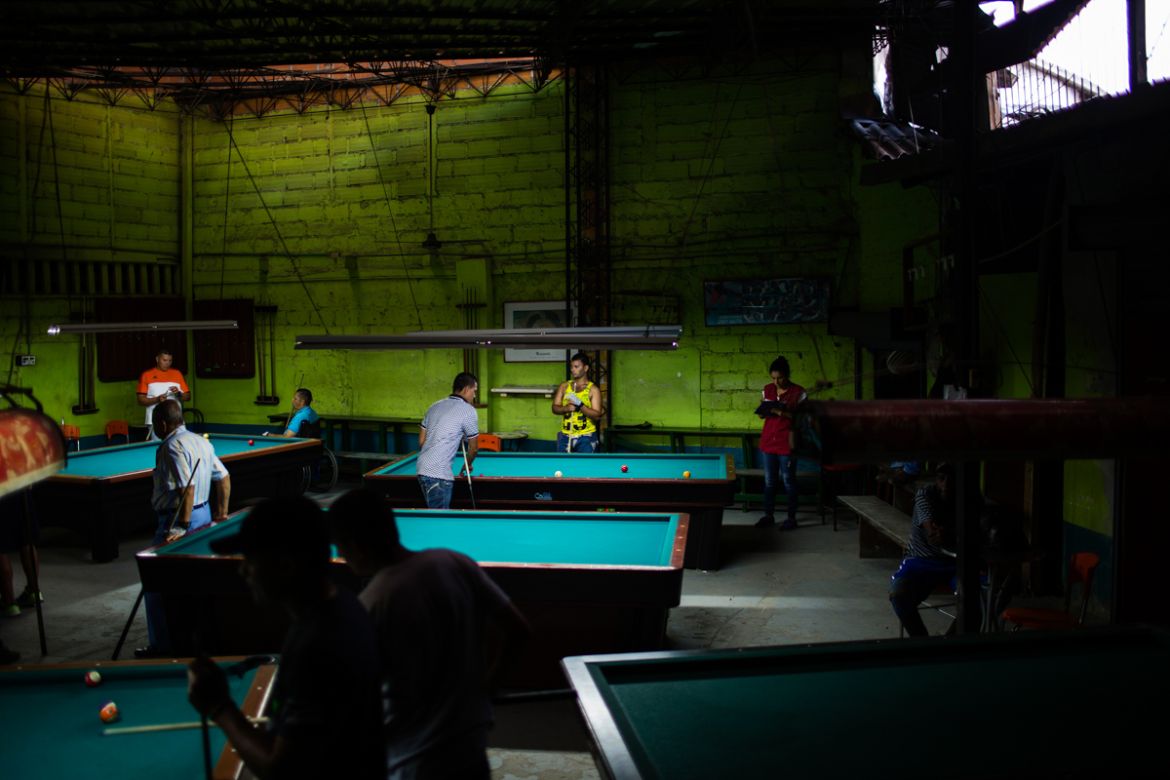
Colombian miners play pool after a long day inside the mine. Most of the inhabitants of Segovia depend financially - either directly or indirectly - on the mines. [Diego Ibarra Sanchez/MeMo/Al Jazeera]
Blood gold in Colombia/ Please Do Not Use
Two Colombian miners spend their money on slot machines. [Diego Ibarra Sanchez/MeMo/Al Jazeera]
Advertisement
Blood gold in Colombia/ Please Do Not Use
Colombians walk through the streets of Segovia, which has a number of stores for buying and selling gold. [Diego Ibarra Sanchez/MeMo/Al Jazeera]
Blood gold in Colombia/ Please Do Not Use
A memorial for the 1988 massacre of 43 civilians. On November 11, 1988, heavily armed men drove in trucks into the centre of Segovia, opened fire and threw grenades indiscriminately, killing 43 people, including three children, and wounding more than 50 others. Segovia has been the site of numerous acts of violence in recent times. [Diego Ibarra Sanchez/MeMo/Al Jazeera]
Blood gold in Colombia/ Please Do Not Use
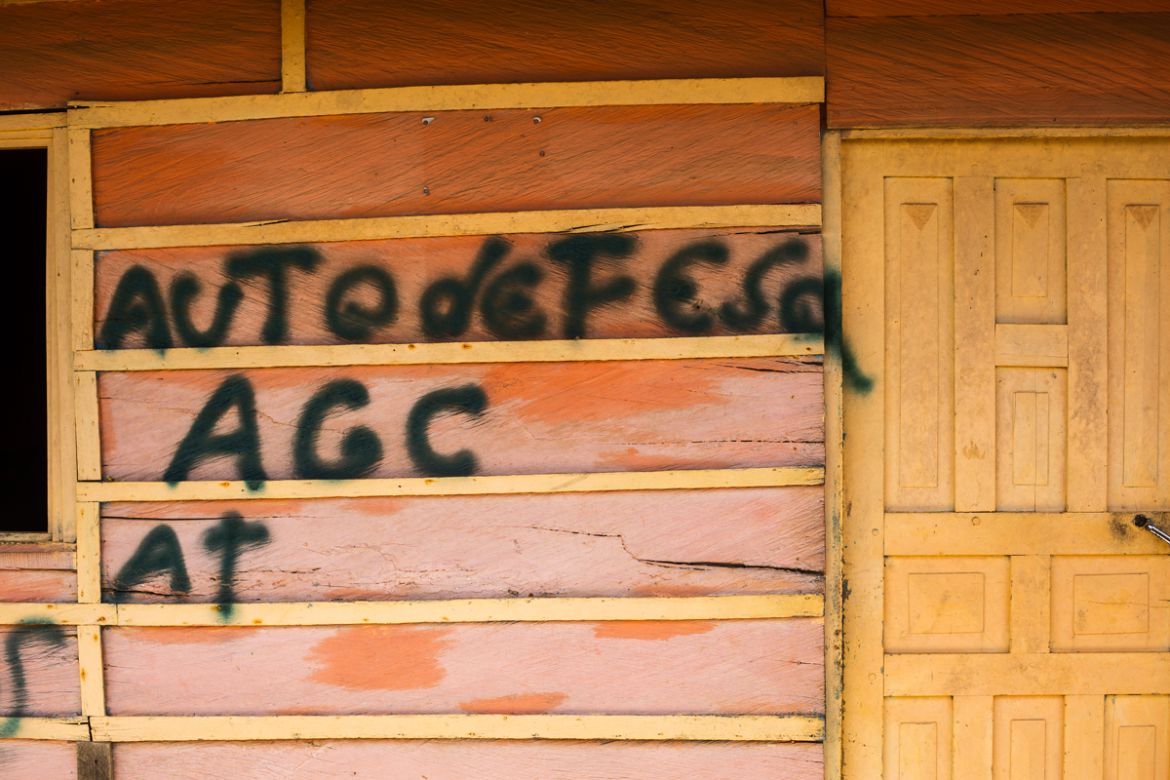
The graffiti of a neo-paramilitary group is seen outside a Colombian house on the outskirts of Segovia. Armed groups have threatened miners and extorted money from them. Extortion has become a mainstay of illegal armed groups' mining operations. [Diego Ibarra Sanchez/MeMo/Al Jazeera]
Blood gold in Colombia/ Please Do Not Use
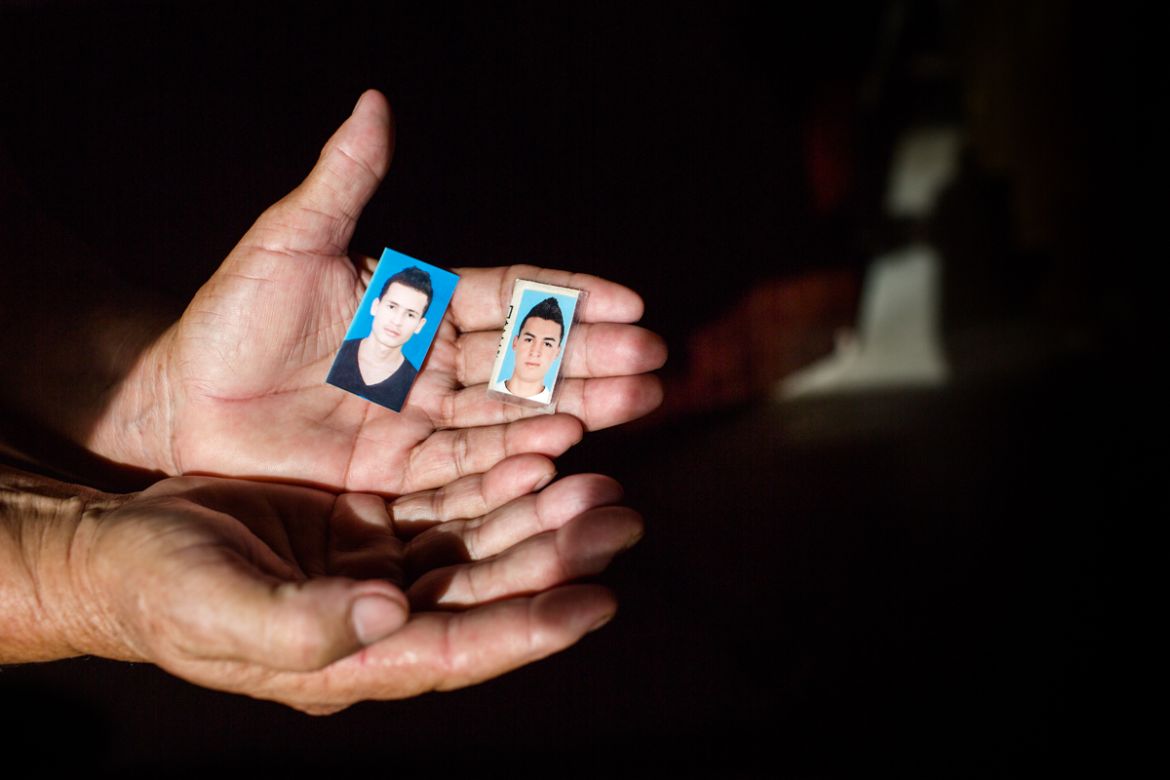
Maria Ligia holds photographs of her sons, Jonathan Esteban and Wilfer Norberto Alvarez, who were killed by armed groups in 2016. They were both miners in Segovia. [Diego Ibarra Sanchez/MeMo/Al Jazeera]
Blood gold in Colombia/ Please Do Not Use
A Colombian woman holds a picture of her son, who was a miner killed by an armed group in Segovia in March 2016. The mother lives in the 20th July neighbourhood which is controlled by a right-wing paramilitary group. [Diego Ibarra Sanchez/MeMo/Al Jazeera]
Blood gold in Colombia/ Please Do Not Use
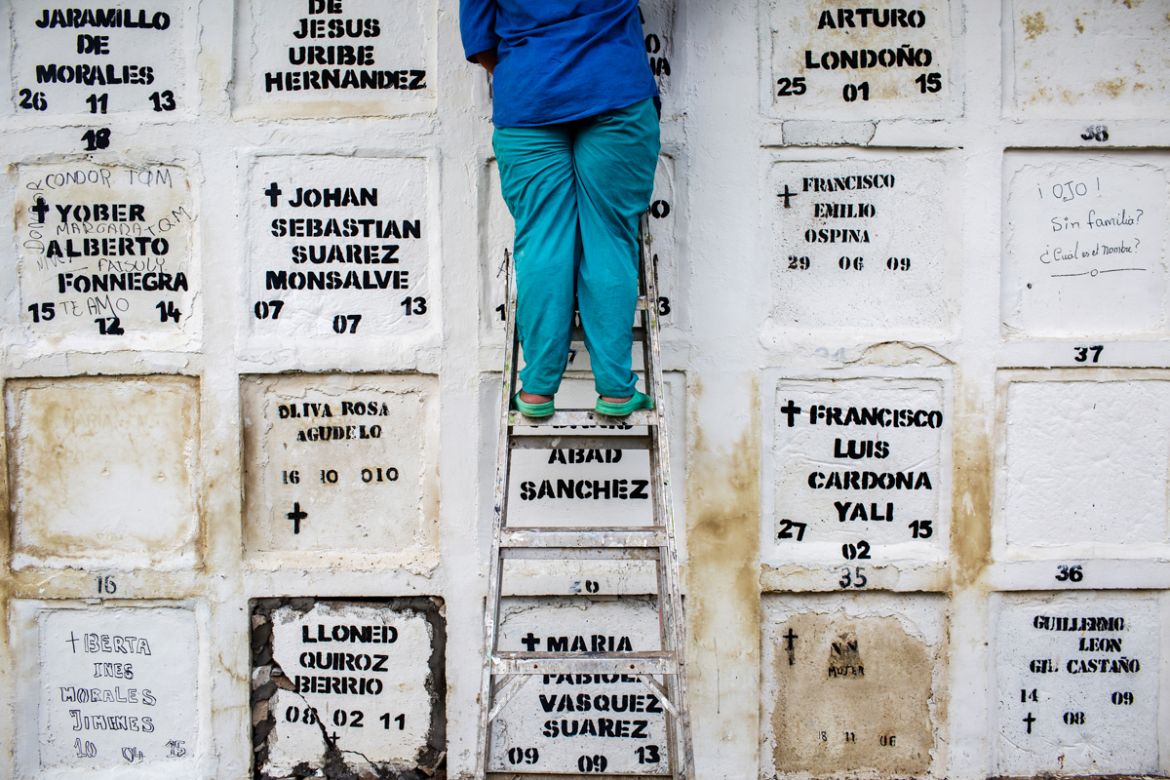
A holy statue with a funeral wreath is seen inside Segovia's graveyard. The graveyard has numerous unidentified graves. Violence has resulted from the gold boom of recent years. [Diego Ibarra Sanchez/MeMo/Al Jazeera]
Blood gold in Colombia/ Please Do Not Use
Maria Luisa Montanes, who has been a gravedigger for more than 30 years, writes the name of Jonathan Esteban, son of Maria Ligia, who was killed in July 2016. [Diego Ibarra Sanchez/MeMo/Al Jazeera]
Blood gold in Colombia/ Please Do Not Use
A view of Segovia early one rainy morning in July 2016. [Diego Ibarra Sanchez/MeMo/Al Jazeera]

Related

  • Colombia: Government, FARC scramble to save peace deal

    Both sides vow to “fix” issues after voters rejected a peace accord with the Marxist group to end 52 years of war.

    Published On 3 Oct 20163 Oct 2016
    Supporters of "No" vote celebrate after the nation voted "NO" in a referendum on a peace deal between the government and FARC rebels in Bogota, Colombia
  • Colombia referendum: Peace deal with FARC rejected

    President Santos says ceasefire to remain in place as rebels also vow commitment to peace talks after shock vote result.

    Published On 3 Oct 20163 Oct 2016
    Colombia
  • Into the green land: Emerald mining in Colombia

    Emerald seekers scour Colombia’s Muzo Valley, searching for the gem that could lift them out of poverty.

    Published On 20 Mar 201720 Mar 2017
    Into the Green Land/ Please Do Not Use
    This gallery article has 14 imagescamera14

More from Gallery

  • Photos: Manila’s streets empty as fuel prices surge amid Hormuz crisis

    A sharp increase in prices of basic commodities and the possible loss of employment for thousands of people due to the fuel price hike have raised the spectre of stagflation in the Philippines.
    This gallery article has 10 imagescamera10
  • Photos: More than one million displaced by Israel’s evacuations in Lebanon

    Over one million displaced by Israel’s evacuations in Lebanon
    This gallery article has 10 imagescamera10
  • Migrants march in southern Mexico to denounce immigration restrictions

    Migrants, some carrying children, walk on the highway through the municipality of Huehuetan, Chiapas state, Mexico, Wednesday, March 25, 2026, after leaving Tapachula the previous night. (AP Photo/Edgar H. Clemente)
    This gallery article has 9 imagescamera9
  • Photos: Iran fires new waves of missiles at Israel

    This picture shows damaged buildings at the site of an Iranian missile strike in Tel Aviv
    This gallery article has 8 imagescamera8

Most popular

  • Trump issues new 10-day deadline for attack on Iran energy infrastructure

    FILE PHOTO: Emergency personnel respond at a site following Iranian missile barrages in central Israel, amid the U.S.-Israel conflict with Iran, in Tel Aviv, Israel, March 24, 2026. REUTERS/Tomer Appelbaum ISRAEL OUT. NO COMMERCIAL OR EDITORIAL SALES IN ISRAEL/File Photo
  • Iran war updates: US, Israel attack ignites worst trade rupture in 80 years

    This handout image taken by the European Space Agency (ESA) captured by the Copernicus Sentinel-2 satellite shows a view of smoke plumes billowing in the vicinity Kuwait International Airport on March 25, 2026.
  • Tehran’s ‘toll booth’: How Iran picks who to let through Strait of Hormuz

    The Callisto tanker sits anchored in Port Sultan Qaboos as the traffic is down in the Strait of Hormuz
  • US-Israel war on Iran: What’s happening on day 28 of attacks?

    Protesters attend a rally.

  • About

    • About Us
    • Code of Ethics
    • Terms and Conditions
    • EU/EEA Regulatory Notice
    • Privacy Policy
    • Cookie Policy
    • Cookie Preferences
    • Accessibility Statement
    • Sitemap
    • Work for us
  • Connect

    • Contact Us
    • User Accounts Help
    • Advertise with us
    • Stay Connected
    • Newsletters
    • Channel Finder
    • TV Schedule
    • Podcasts
    • Submit a Tip
    • Paid Partner Content
  • Our Channels

    • Al Jazeera Arabic
    • Al Jazeera English
    • Al Jazeera Investigative Unit
    • Al Jazeera Mubasher
    • Al Jazeera Documentary
    • Al Jazeera Balkans
    • AJ+
  • Our Network

    • Al Jazeera Centre for Studies
    • Al Jazeera Media Institute
    • Learn Arabic
    • Al Jazeera Centre for Public Liberties & Human Rights
    • Al Jazeera Forum
    • Al Jazeera Hotel Partners

Follow Al Jazeera English:

  • facebook
  • twitter
  • youtube
  • instagram-colored-outline
  • rss
Al Jazeera Media Network logo
© 2026 Al Jazeera Media Network