Skip linksSkip to Content
play
Live
Navigation menu
  • News
    • Africa
    • Asia
    • US & Canada
    • Latin America
    • Europe
    • Asia Pacific
  • Middle East
  • Explained
  • Opinion
  • Sport
  • Video
    • Features
    • Economy
    • Human Rights
    • Climate Crisis
    • Investigations
    • Interactives
    • In Pictures
    • Science & Technology
    • Podcasts
    • Travel
play
Live

In Pictures

Gallery|In Pictures

Chile’s Indigenous Mapuche Gen Z resist police brutality

The Mapuche Gen Z are resisting police violence against Indigenous youth through music and activism.
Save

Share

facebooktwitterwhatsappcopylink
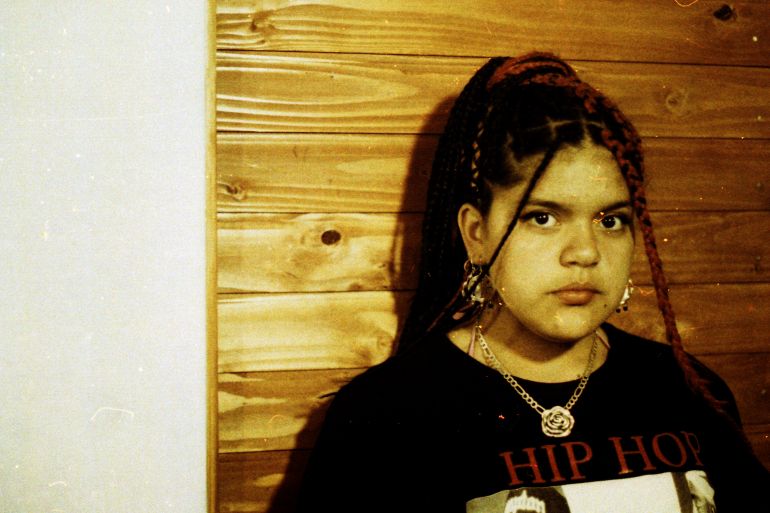
Millaray Jara Collio, also known as MC Millaray, is a 15-year-old rapper who has become one of the most renowned Mapuche Gen Z activists. Millaray made her musical debut at the age of five and has been speaking up for her people since. “I’m recording a song with my dad to raise awareness about the violence and repression that Mapuche children face,” she says. [Jeremy Hatcher/Al Jazeera]
By Jia Naqvi
Published On 22 Nov 202122 Nov 2021

A new generation of Indigenous Mapuche activists is drawing attention to an ongoing horror in the country’s south – police brutality against Mapuche youth.

The Mapuche, the largest Indigenous community in Chile, is also one of the most socially and economically disadvantaged groups in a country that already suffers significant inequality.

Their battle for recognition, justice, and the return of their ancestral lands has gone on for centuries, but the mass Chilean protests that broke out in 2019 were a further political reawakening for the Mapuche.

With more than one million people on the streets, angry at transport price hikes and demanding a more equitable society, the Mapuche flag become one of the defining symbols of resistance for all Chileans.

This solidarity breathed new life into the Mapuche cause, and activists called louder for the return of ancestral lands confiscated and sold to private companies during the rule of General Augusto Pinochet.

But it was the Mapuche Gen Z who drew people’s attention to an issue often swept under the rug – police brutality.

MC Millaray, or Millaray Jara Collio, is one of the most prominent Mapuche Gen Z activists. The 15-year-old has already been on the music scene for 10 years and has spoken up for her people all along.

“I feel that most of us who live in the city are complicit by being silent about the reality faced by the Mapuche in southern Chile,” she says.

“I’m recording a song with my dad to raise awareness about the violence and repression that Mapuche children face,”

Advertisement

In Araucanía, the “Mapuche heartland” seven hours drive south of Santiago, violent clashes between militarised Special Forces police and Mapuche communities trying to reclaim their ancestral lands rage on.

Activists and locals accuse the police of human rights abuses and abuse of power, including fabricating evidence against Indigenous activists and killing unarmed Mapuche civilians.

Confrontations escalated following the police shooting of 24-year-old Camilo Catrillanca, grandson of a prominent Mapuche leader, in the back of the head as he drove away on a tractor in November 2018.

The case outraged Mapuche communities and Chilean society at large and thousands took to the streets to decry the violence and to demand the disbandment of the “jungle commandos” unit responsible for the incident.

Millaray also uses her growing social media influence to highlight the injustices inflicted on the Mapuche communities in the country.

“All of us should have a free childhood. One free of repression. But as long as that’s not the reality, I’ll keep on raising my voice”, Millaray added.
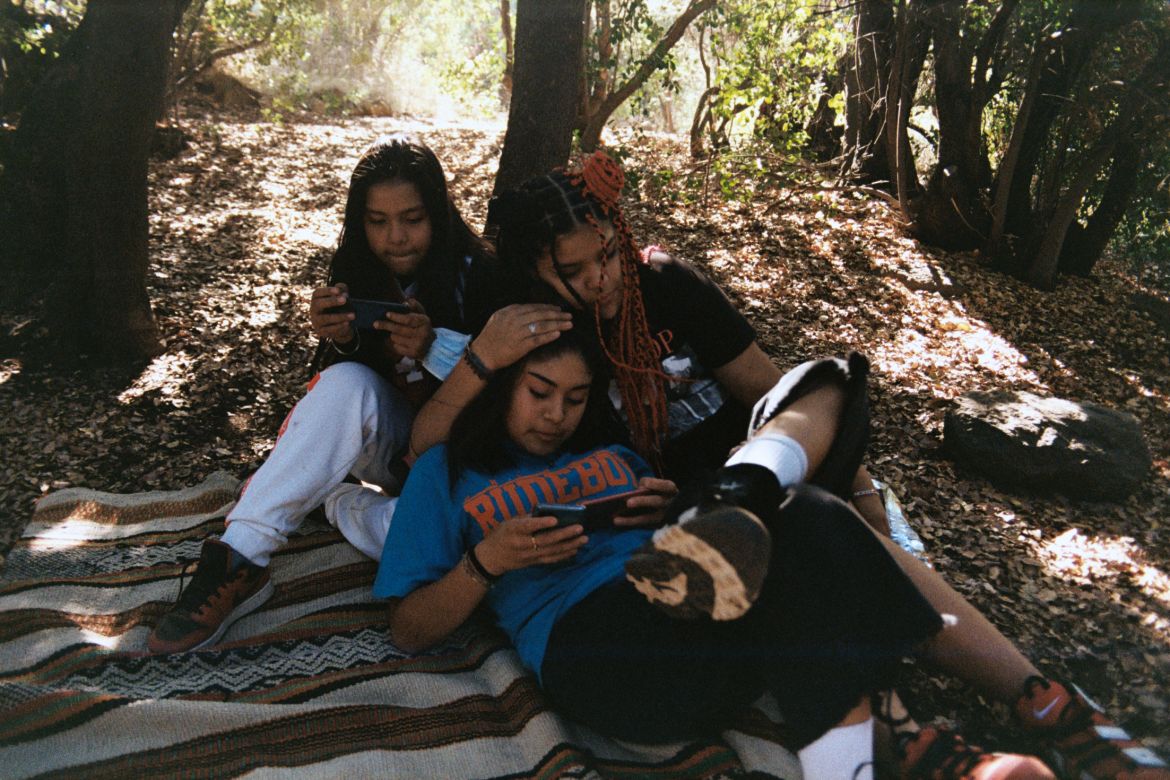
Millaray Jara Collio sits with her sister Kelly and her friend Tiare Wentecol in Santiago. Tiare recalls she was eight or nine years old when she first witnessed a police raid at her home in Wallmapu, a Mapuche territory in southern Chile. Now, raids have become a part of her life. During one recent raid, Tiare says, “I was with my mum in the orchard. Suddenly we heard really loud noises. There were about two or three military and police helicopters. I think it’s awful because it’s like we’re being watched”. [Jeremy Hatcher/Al Jazeera]
Advertisement
Mapuche rapper MC Millaray, right, stands next to activist Tiare Wentecol, photographed in traditional clothing, as they prepare for a traditional Mapuche drum ceremony in Santiago. The drumming is part of the salute they gave to the Rehue (spiritual totem). [Jeremy Hatcher/Al Jazeera]
The view outside Millaray’s grandmother’s home in the La Pincoya neighbourhood of Santiago, where Millaray grew up. The neighbourhood is known for its hip-hop culture and for being a hub of political resistance. [Emi Martin/Al Jazeera]
While Mapuche hip-hop artist MC Millaray records a song with her friend Tiare Wentecol, Claudia, Millaray’s mum, and Nano, her brother, wait outside this recording studio in Temuco, Chile. [Jeremy Hatcher/Al Jazeera]
Temuco is the capital of the Araucanía Region in southern Chile. In the last few years, Araucanía has seen frequent clashes between Mapuche communities and militarised Special Forces police. “Not a week goes by that I don’t receive videos of the violence and other incidents taking place in Wallmapu (Mapuche territory)”, says Millaray. [Jeremy Hatcher/Al Jazeera]
Millaray poses in her traditional Mapuche Kupal as she gets ready to attend a rally to mark International Women's Day on March 8 in Santiago. [Emi Martin/Al Jazeera]
Advertisement
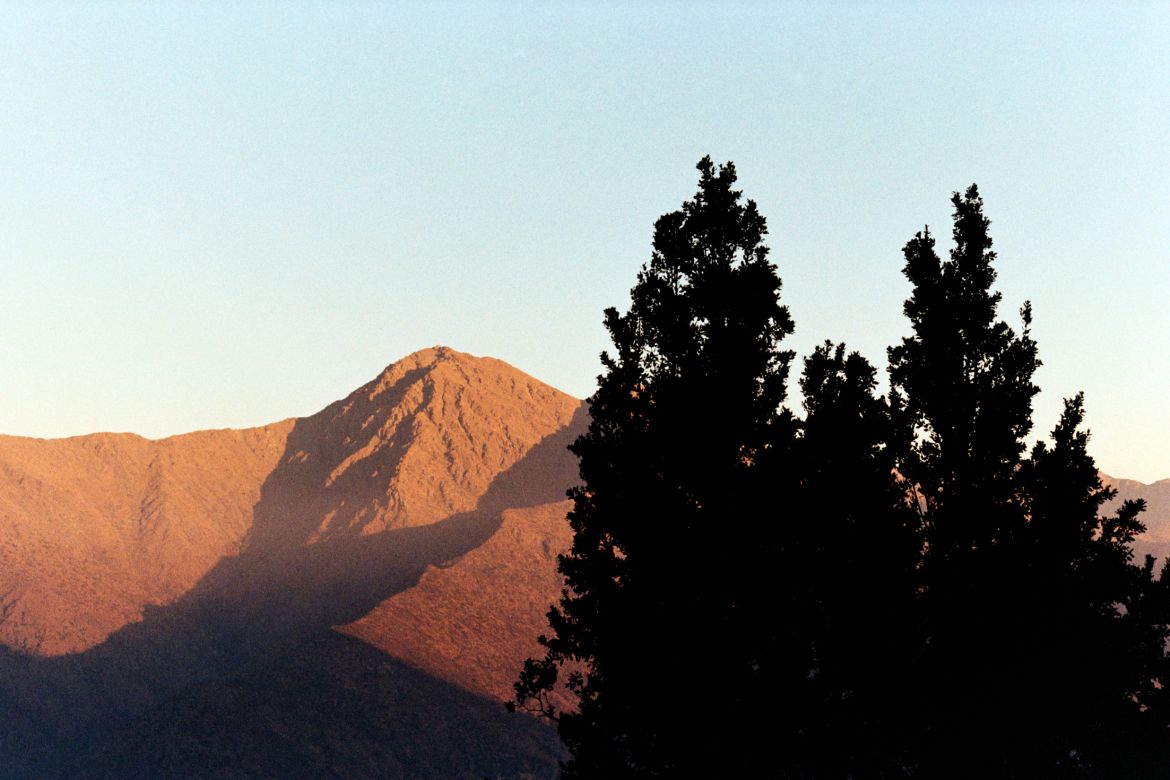
A mountain range on the outskirts of Santiago. Most of Chile's Mapuche population lives in cities like Santiago, Temuco, and Concepción. Before moving to the cities, Mapuche communities lived on reservations, continuously subjected to expropriation by powerful landowners, forcing many Mapuche to relocate. [Jeremy Hatcher/Al Jazeera]
Mapuche activist and hip-hop artist, MC Millaray, centre, with her grandparents in La Pincoya, Santiago. [Emi Martin/Al Jazeera]
In Chile, young activists like Millaray, are using their social media platforms to challenge stereotypes and mobilise communities to demand their rights. [Jeremy Hatcher/Al Jazeera]
MC Millaray poses in front of a banner during the International Women’s Day rally in Santiago. The banner reads, “For our murdered sisters, an example of struggle and resistance”. [Emi Martin/Al Jazeera]
An estimated 2 million people in Chile marched to mark International Women’s Day on March 8, 2021. From Mapuche activists to Chilean social leaders, people from across the country came together to protest against social inequality and patriarchal violence. [Emi Martin/Al Jazeera]
An Indigenous protester embraces MC Millaray. The young rapper has emerged as the face of a new generation of activists in Chile, who are furthering their community’s centuries-long fight for autonomy and cultural recognition. [Emi Martin/Al Jazeera]
Indigenous protesters celebrate their culture with traditional clothes and music at the International Women’s Day march in 2021, Santiago. [Emi Martin/Al Jazeera]

Related

  • Photos: Iran fires new waves of missiles at Israel

    Israel’s Magen David Adom emergency medical service said ‘six people were lightly injured’ in the missile strikes.

    Published On 24 Mar 202624 Mar 2026
    This picture shows damaged buildings at the site of an Iranian missile strike in Tel Aviv
    This gallery article has 8 imagescamera8
  • Photos: Aftermath of Iranian missile strikes near Israel’s nuclear facility

    It was the first time Iranian missiles had penetrated Israeli air defence systems in the area around a key nuclear site.

    Published On 22 Mar 202622 Mar 2026
    People stand at a damaged area following a night of Iranian missile strikes
    This gallery article has 8 imagescamera8
  • Muslims celebrate Eid al-Fitr around the world amid shadow of war

    People gather with family and for congregational prayers to mark the end of the holy fasting month.

    Published On 20 Mar 202620 Mar 2026
    People offer communal prayers amid the rubble of destroyed buildings.
    This gallery article has 9 imagescamera9
  • Photos: Displaced Lebanese shelter in schools, stadiums amid Israeli attack

    Israeli attacks displace over 800,000 in Lebanon and kill more than 800, as the UN launches an urgent aid appeal.

    Published On 16 Mar 202616 Mar 2026
    Lebanon Israel Iran
    This gallery article has 9 imagescamera9

More from Gallery

  • Photos: Manila’s streets empty as fuel prices surge amid Hormuz crisis

    A sharp increase in prices of basic commodities and the possible loss of employment for thousands of people due to the fuel price hike have raised the spectre of stagflation in the Philippines.
    This gallery article has 10 imagescamera10
  • Photos: More than one million displaced by Israel’s evacuations in Lebanon

    Over one million displaced by Israel’s evacuations in Lebanon
    This gallery article has 10 imagescamera10
  • Migrants march in southern Mexico to denounce immigration restrictions

    Migrants, some carrying children, walk on the highway through the municipality of Huehuetan, Chiapas state, Mexico, Wednesday, March 25, 2026, after leaving Tapachula the previous night. (AP Photo/Edgar H. Clemente)
    This gallery article has 9 imagescamera9
  • Photos: Iran fires new waves of missiles at Israel

    This picture shows damaged buildings at the site of an Iranian missile strike in Tel Aviv
    This gallery article has 8 imagescamera8

Most popular

  • Iran targets Saudi capital, hits Kuwait port as Middle East tensions surge

    TOPSHOT - This video grab taken from images released by the Iranian state broadcaster (IRIB) on March 26, 2026, shows what it says is the second phase of the 82nd wave of missiles launched against Israel and US bases in the United Arab Emirates and Kuwait.
  • How extensive is Russia’s military aid to Iran?

    Iranian missile strikes
  • Saudi, UAE, Iraq: Can three pipelines help oil escape Strait of Hormuz?

    TOPSHOT - Indian vessel 'Nanda Devi' carrying liquefied petroleum gas (LPG) arrives at Vadinar Port in the Jamnagar district of Gujarat state on March 17, 2026 after Iran allowed it to pass through the Strait of Hormuz, a key energy corridor that remains disrupted by the Middle East war.
  • ‘Raising 10 red flags’: Is Israel’s army exhausted?

    Israeli soldiers

  • About

    • About Us
    • Code of Ethics
    • Terms and Conditions
    • EU/EEA Regulatory Notice
    • Privacy Policy
    • Cookie Policy
    • Cookie Preferences
    • Accessibility Statement
    • Sitemap
    • Work for us
  • Connect

    • Contact Us
    • User Accounts Help
    • Advertise with us
    • Stay Connected
    • Newsletters
    • Channel Finder
    • TV Schedule
    • Podcasts
    • Submit a Tip
    • Paid Partner Content
  • Our Channels

    • Al Jazeera Arabic
    • Al Jazeera English
    • Al Jazeera Investigative Unit
    • Al Jazeera Mubasher
    • Al Jazeera Documentary
    • Al Jazeera Balkans
    • AJ+
  • Our Network

    • Al Jazeera Centre for Studies
    • Al Jazeera Media Institute
    • Learn Arabic
    • Al Jazeera Centre for Public Liberties & Human Rights
    • Al Jazeera Forum
    • Al Jazeera Hotel Partners

Follow Al Jazeera English:

  • facebook
  • twitter
  • youtube
  • instagram-colored-outline
  • rss
Al Jazeera Media Network logo
© 2026 Al Jazeera Media Network