Skip linksSkip to Content
play
Live
Navigation menu
  • News
    • Africa
    • Asia
    • US & Canada
    • Latin America
    • Europe
    • Asia Pacific
  • Middle East
  • Explained
  • Opinion
  • Sport
  • Video
    • Features
    • Economy
    • Human Rights
    • Climate Crisis
    • Investigations
    • Interactives
    • In Pictures
    • Science & Technology
    • Podcasts
    • Travel
play
Live

In Pictures

Gallery|In Pictures

‘So proud’: Hip-hop making waves at Dharavi, India’s largest slum

Dharavi Dream Project hip-hop academy changes lives and fights stigma dogging the densely-populated corner of Mumbai.
Save

Share

facebooktwitterwhatsappcopylink
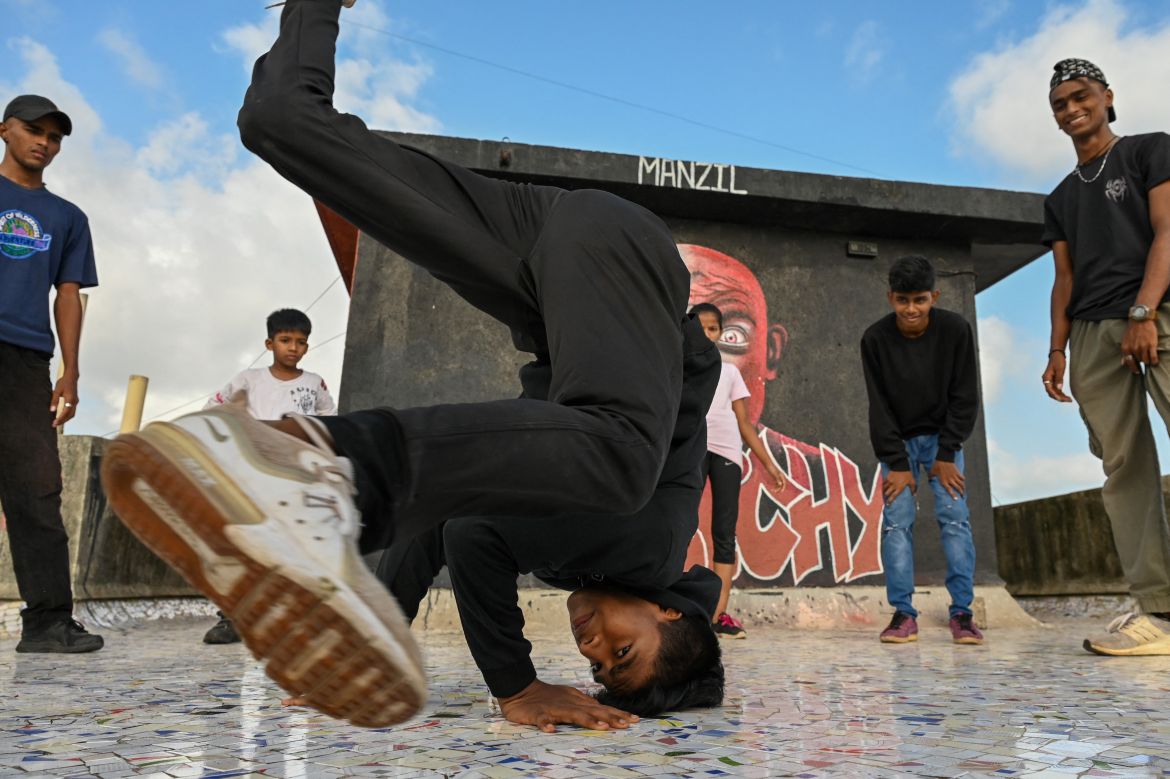
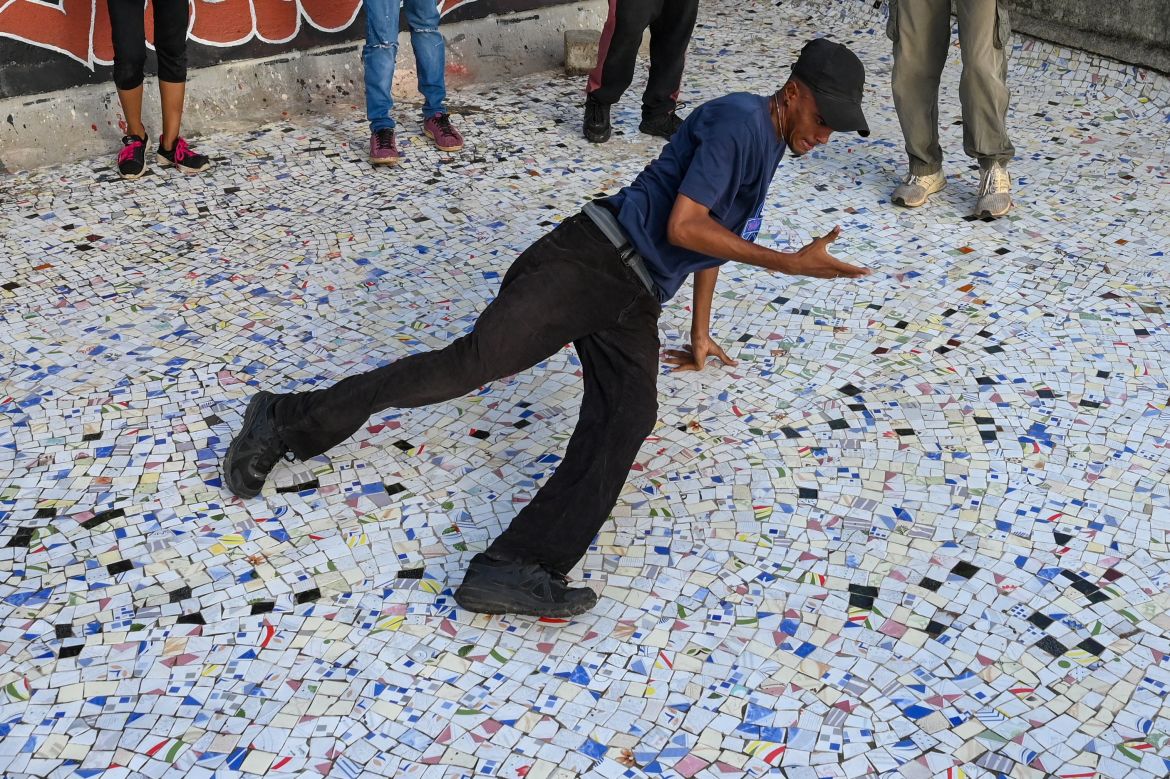
A student performs during a group class to learn breaking or "b-boying" at a training session on the rooftop of a building in Dharavi slums, Mumbai. [Ammu Kannampilly/AFP]
By AFP
Published On 9 Aug 20219 Aug 2021

After India’s largest slum defeated the pandemic, some of its young residents pulled out their phones to write, shoot and release a triumphant rap video.

“At first we were afraid, what would happen to us? But we stood with the doctors… now it’s your turn”, rapped the young men in the video.

“We Did It” – “Kar Dikhaya” in Hindi – showcased new talent and won acclaim from celebrities, but its creators’ abiding goal was to fight the stigma dogging this densely populated corner of Mumbai.

The Dharavi slum is home to about one million people, many of whom live in single-room shanties and share communal toilets.

Its alleys have long been associated with filth and disease despite its remarkable success in the battle against COVID-19, and its residents battle constant discrimination.

But Ayush Tegar Renuka, one of the star students of the Dharavi Dream Project hip-hop academy, told the AFP news agency he feels “so proud” of belonging to the community.

“The Dharavi shown on TV channels and the real Dharavi are very different places,” the 16-year-old said.

Ayush began breakdancing three years ago, persevering in spite of his widowed mother’s pleas to give up a pursuit she feared would result in a trip to the hospital.

She was not alone. Many parents were initially reluctant to enrol their children in the school’s free classes, dismissing hip-hop as dangerous, a distraction from homework or simply a waste of time.

The Dharavi Dream Project’s co-founder Dolly Rateshwar was determined to change their minds.

Advertisement

The daughter of a Hindu priest, Rateshwar was nervous about venturing into the neighbourhood, but the teenagers she met struck a chord with her.

“I was raised in a very conservative family… I never knew there was a bigger world out there,” said the 38-year-old. “And I was worried that these kids might lose out on life because they didn’t know the possibilities open to them.”

The school opened its doors in 2015, offering free classes in breakdancing, beatboxing and rapping to approximately 20 students, with digital media start-up Qyuki – Rateshwar’s employer – and US entertainment titan Universal Music Group footing the bill.

As the project won praise from musical icons such as Oscar-winning composer AR Rahman, it rapidly expanded, with young students like Joshua Joseph – now better known as MC Josh – using hip-hop to tell their stories.

If Black rappers in the United States could shine a light on racism, he reasoned, hip-hop could do the same for India’s glaring inequality and mistreatment of marginalised communities.

“My confidence level was zero before I started to rap,” the 21-year-old told AFP. “The school changed my life.”

When COVID-19 arrived, the rapper’s income collapsed overnight as Dharavi was put under a stringent months-long lockdown.

Mumbai authorities quickly realised that the slum held the key to defeating the pandemic and launched “Mission Dharavi” – aggressively sanitising communal toilets, running daily “fever camps” to check for symptoms, repurposing wedding halls as quarantine facilities, and asking residents to stay home.

By the end of June 2020, Dharavi had recorded just 82 deaths, a fraction of Mumbai’s more than 4,500 fatalities.

Like the slum, the school’s staff also refused to be cowed by the virus, switching to online classes soon after the first wave of infections hit last year.

As the pandemic ground on, Rateshwar realised that the academy could expand its reach even further, and broadcast an invitation on Instagram for anyone, anywhere, to join their classes.

They received 800 responses in the first 24 hours.

A year on, the school hosts 100 students who attend every online session – half from Dharavi itself – and 300 others who pop in occasionally, including from overseas.

But Rateshwar’s focus remains firmly on students from the Mumbai slum, on making sure their voices are heard and their future prospects secured.

“Obviously everyone wants to become a superstar but… I also try to tell them about alternative careers in the music industry, as artists’ managers, or jobs in social media,” she said.

Advertisement

“Most of all, I want them to stand tall.”

For 21-year-old teacher Vikram Gaja Godakiya, who learned breakdancing from YouTube videos, the school means much more than a steady paychecque.

“People have always been unfair to Dharavi,” he told AFP, describing how the pandemic had made employers increasingly reluctant to hire slum-dwellers.

When Godakiya started breakdancing in secret nine years ago, he never imagined he would be able to do it for a living.

“Breaking has given my life purpose,” he said. “I want my students to know that they can do anything if they give it their 100 percent.”

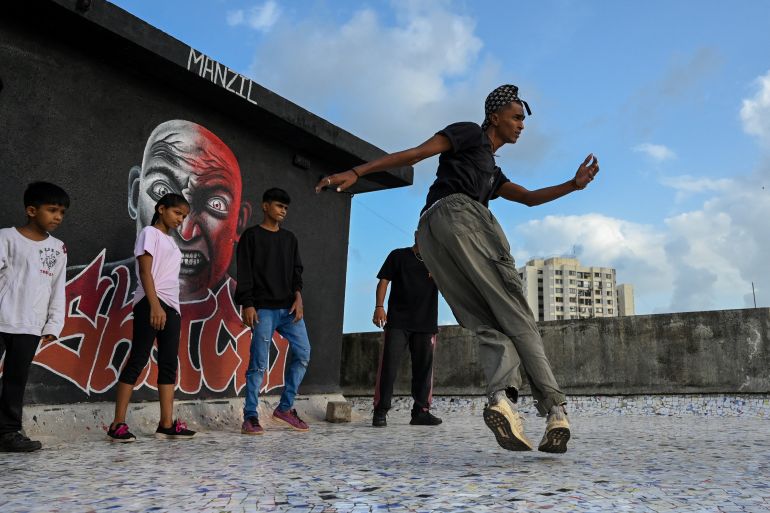
Coach Vikram Godakiya, right, performs in front of the students during a group class. [Ammu Kannampilly/AFP]
Advertisement
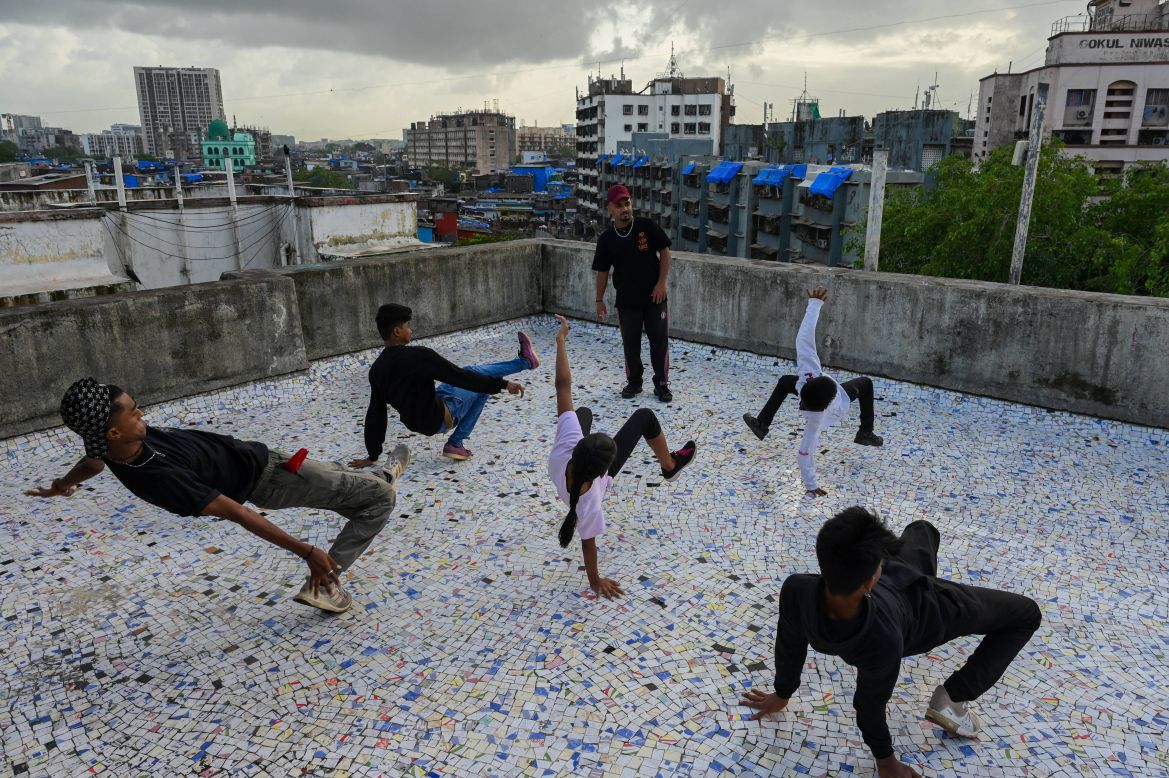
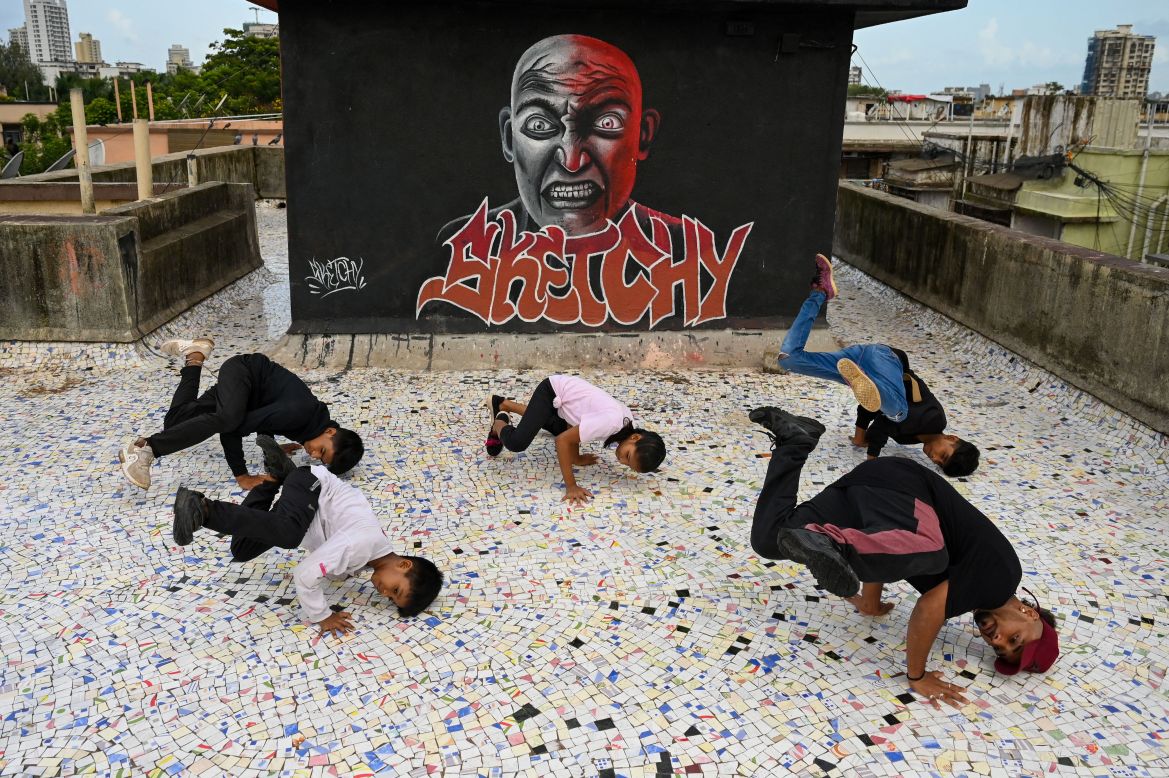
The school opened its doors in 2015, offering free classes in breakdancing, beatboxing and rapping to around 20 students. [Ammu Kannampilly/AFP]
A student performs during a group class to learn breaking. The project won praise from musical icons such as Oscar-winning Indian composer AR Rahman. [Ammu Kannampilly/AFP]
As the pandemic ground on, the academy expanded its reach and broadcast an invitation on Instagram for anyone, anywhere to join. [Ammu Kannampilly/AFP]
Coach Vikram Godakiya, in a red cap, centre, watches students during a group class. The Dharavi slum is home to some one million people, many of whom live in single-room shanties and share communal toilets. [Ammu Kannampilly/AFP]
The academy hosts 100 students who attend every online session - half from Dharavi itself - and 300 others who pop in occasionally, including from overseas. [Ammu Kannampilly/AFP]
Advertisement
Dharavi Dream Project's co-founder Dolly Rateshwar's focus remains firmly on students from the Mumbai slum, on making sure their voices are heard and their future prospects secured. [Ammu Kannampilly/AFP]

Related

  • Hip-Hop Homeland: India’s underground rap scene

    A new hip-hop movement in India sees rappers perform in the vernacular to speak to – and for – the Indian masses.

    Published On 8 Jul 20168 Jul 2016
    Hip-hop India
  • ‘Chasing the virus’: How India’s largest slum overcame a pandemic

    Mumbai’s Dharavi offers a glimmer of hope with new cases shrinking thanks to an aggressive plan adopted by authorities.

    Published On 1 Jul 20201 Jul 2020
    Dharavi
  • Volunteers teach children in Gujarat slum with no internet access

    This little outdoor school in a Gujarat slum was started by two Indian women during the pandemic.

    Published On 28 Jun 202128 Jun 2021
    Video Duration 01 minutes 38 seconds play-arrow01:38

More from Gallery

  • Photos: Manila’s streets empty as fuel prices surge amid Hormuz crisis

    A sharp increase in prices of basic commodities and the possible loss of employment for thousands of people due to the fuel price hike have raised the spectre of stagflation in the Philippines.
    This gallery article has 10 imagescamera10
  • Photos: More than one million displaced by Israel’s evacuations in Lebanon

    Over one million displaced by Israel’s evacuations in Lebanon
    This gallery article has 10 imagescamera10
  • Migrants march in southern Mexico to denounce immigration restrictions

    Migrants, some carrying children, walk on the highway through the municipality of Huehuetan, Chiapas state, Mexico, Wednesday, March 25, 2026, after leaving Tapachula the previous night. (AP Photo/Edgar H. Clemente)
    This gallery article has 9 imagescamera9
  • Photos: Iran fires new waves of missiles at Israel

    This picture shows damaged buildings at the site of an Iranian missile strike in Tel Aviv
    This gallery article has 8 imagescamera8

Most popular

  • Iran targets Saudi capital, hits Kuwait port as Middle East tensions surge

    TOPSHOT - This video grab taken from images released by the Iranian state broadcaster (IRIB) on March 26, 2026, shows what it says is the second phase of the 82nd wave of missiles launched against Israel and US bases in the United Arab Emirates and Kuwait.
  • How extensive is Russia’s military aid to Iran?

    Iranian missile strikes
  • US-Israel war on Iran: What’s happening on day 28 of attacks?

    Protesters attend a rally.
  • Iran war updates: US, Israel attack ignites worst trade rupture in 80 years

    This handout image taken by the European Space Agency (ESA) captured by the Copernicus Sentinel-2 satellite shows a view of smoke plumes billowing in the vicinity Kuwait International Airport on March 25, 2026.

  • About

    • About Us
    • Code of Ethics
    • Terms and Conditions
    • EU/EEA Regulatory Notice
    • Privacy Policy
    • Cookie Policy
    • Cookie Preferences
    • Accessibility Statement
    • Sitemap
    • Work for us
  • Connect

    • Contact Us
    • User Accounts Help
    • Advertise with us
    • Stay Connected
    • Newsletters
    • Channel Finder
    • TV Schedule
    • Podcasts
    • Submit a Tip
    • Paid Partner Content
  • Our Channels

    • Al Jazeera Arabic
    • Al Jazeera English
    • Al Jazeera Investigative Unit
    • Al Jazeera Mubasher
    • Al Jazeera Documentary
    • Al Jazeera Balkans
    • AJ+
  • Our Network

    • Al Jazeera Centre for Studies
    • Al Jazeera Media Institute
    • Learn Arabic
    • Al Jazeera Centre for Public Liberties & Human Rights
    • Al Jazeera Forum
    • Al Jazeera Hotel Partners

Follow Al Jazeera English:

  • facebook
  • twitter
  • youtube
  • instagram-colored-outline
  • rss
Al Jazeera Media Network logo
© 2026 Al Jazeera Media Network