Skip linksSkip to Content
play
Live
Navigation menu
  • News
    • Africa
    • Asia
    • US & Canada
    • Latin America
    • Europe
    • Asia Pacific
  • Middle East
  • Explained
  • Opinion
  • Sport
  • Video
    • Features
    • Economy
    • Human Rights
    • Climate Crisis
    • Investigations
    • Interactives
    • In Pictures
    • Science & Technology
    • Podcasts
    • Travel
play
Live

In Pictures

Gallery|Agriculture

Driven by money, pushed by passion: Migrant tea pickers of Kerala, India

Kerala, with one of the highest emigration rates in India, is largely dependent on workers from other Indian regions to run its industries.

Save

Share

facebooktwitterwhatsappcopylink
3 Shyam Kalpadia, from Koraput in Odisha, said he introduced many of his friends to Kerala's tea business [Amit Malaviya/Al Jazeera]
Shyam Kalpadia, from Koraput in Odisha, says he introduced many of his friends to Kerala's tea business [Amit Malaviya/Al Jazeera]
By Amit Malaviya

Wayanad, India – The migrant workforce, as in most countries, is the backbone of India’s economy. And Kerala, being among the states with the highest emigration rate in India, is largely dependent on workers from other regions to run its industries.

All businesses, including the beautiful tea, coffee, rubber, spice and coconut plantations spread across the state, are heavily dependent on workers from neighbouring or northern and eastern areas of India, with Uttar Pradesh, Bihar, Jharkhand and Odisha among the top origins.

According to the United Nations, India recorded the highest number of people migrating abroad – more than 6.63 million – in 2024. There is no readily available data on migration within the country in recent years, as the census, which remains the primary source of information in India, was last conducted in 2011.

However, talk to people working in shops, factories, or any of these farms, and the chances are high that you will come across workers from other states.

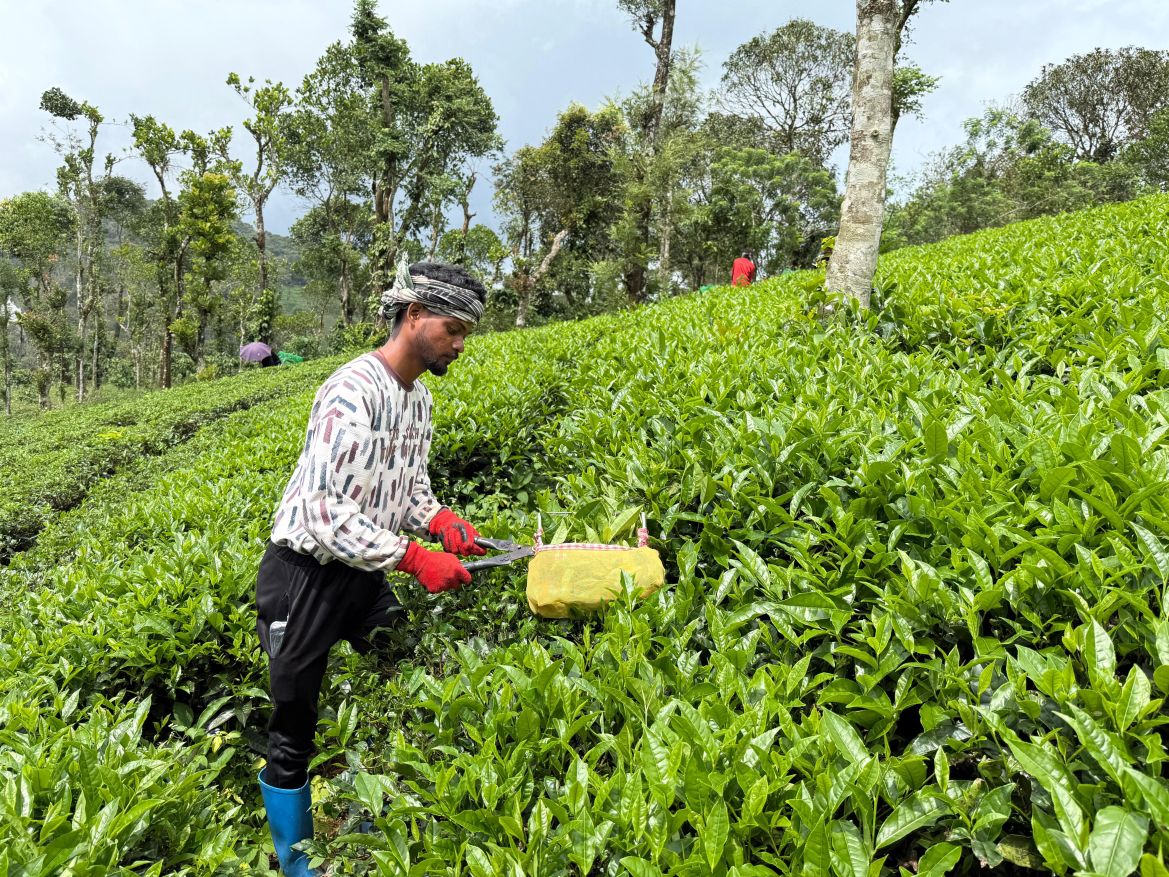
Rajkumar Jani, a 23-year-old botany graduate from Odisha, is among them. Working at a tea garden in the hilly, verdant Wayanad, he did not have much time to spare as he wanted to pluck as many tender tea leaves as he could to meet the target he set for himself.

“We don’t work for a salary. Our earnings depend on the quantity of tea leaves we collect. So no work, no payment,” Jani says, gliding his harvesting shears along the top layer of the tea plants, careful to pluck only fresh, flavourful green leaves.

Advertisement

Asked how he landed in Kerala, about 1,600km (1,000 miles) from his hometown, Koraput in Odisha, Jani said he needed a job to support his family, and there were no decent work offers back home. He got the opportunity through his friend and coworker, Shyam Kalpadia, 26, also from Koraput.

“I was the first to come here six years ago. I came here looking for opportunities as many people from my hometown were arriving here for jobs,” says Kalpadia, who introduced many others to the tea industry in the southern state, including Rutu Nandiwali, 23, and 18-year-old Lakshman Kumar, who were all busy harvesting with him in the picturesque setting.

For Kalpadia, a decent income was the main reason behind moving to Kerala. He said he made 1,500 to 2,000 rupees ($17-$22) a day, much more than he could earn in Odisha, a state with a high poverty rate. In addition to providing payments, employers also arrange accommodation and some provisions for the workers – additional benefits – allowing them to save some money for home.

Being in “God’s own country” – a term coined in the 1980s to define Kerala’s abundant natural beauty, including its serene backwaters, lush greenery, rich flora and fauna, and long stretches of beaches, often linked to local legends in which the land was created by the gods – was another motivation for Kalpadia.

“This place is so beautiful. Wherever you go, it’s so green. People are also nice here,” he said.

Moreover, having studied botany, Jani found the job interesting, and somewhat related to his subject. This made him more passionate about his work.

“This place gets a lot of rain. It makes our work more challenging on these hilly slopes. But we avoid taking days off. What would we do sitting at home? Work not only pays, but it also keeps us entertained,” Jani says, smiling as he stacks the sacks of tea leaves.

A tea garden in Wayanad, Kerala, India-1771255968
A tea garden in Wayanad, Kerala. [Amit Malaviya/Al Jazeera]
Advertisement
7 Rajkumar Jani, 23, a botany graduate, harvests tender tea leaves using a handheld machine-1771255982
Rajkumar Jani, 23, a botany graduate from the eastern state of Odisha, harvests tender tea leaves using a handheld machine. [Amit Malaviya/Al Jazeera]
5 Rajkumar Jani, from the eastern state of Odisha, stacks sacks of tea leaves at a tea garden in Wayanad, Kerala, India-1771255985
Jani stacks sacks of tea leaves at the tea garden in Wayanad. [Amit Malaviya/Al Jazeera]
8 Kalpadia (not pictured) helped many others find jobs in the tea industry in Kerala, including Rutu Nandiwali, 23, and 18-year-old Lakshman Kumar, both seen here harvesting in the distance-1771255992
Shyam Kalpadia (not pictured) helped many others find jobs in the tea industry in Kerala, including Rutu Nandiwali, 23, and Lakshman Kumar, 18, both seen here harvesting in the distance. [Amit Malaviya/Al Jazeera]
A tea garden in the Wayanad district in southern Indian state of Kerala-1771255965
A tea garden in the Wayanad district in the southern Indian state of Kerala. [Amit Malaviya/Al Jazeera]
Kerala tea gardens are also home to its famed spices, as creepers are planted tactfully to make the optimal use of the beautiful hilly slopes (1)-1771255962
In Kerala's tea gardens, creepers are planted tactfully to make optimal use of the hilly slopes. [Amit Malaviya/Al Jazeera]
Advertisement
4 For Kalpadia, a decent income was the main motivation for moving to Kerala-1771255972
For Kalpadia, a decent income is the main motivation for moving to Kerala state. [Amit Malaviya/Al Jazeera]

Related

  • From: NewsFeed

    Philippines farmers feeling the pinch of the war on Iran

    Cabbage farmers in the Philippines are harvesting their crops at a loss as prices plunge and fuel costs soar.

    Published On 25 Mar 202625 Mar 2026
    Cabbage farmers in the Philippines are harvesting their crops at a loss as prices plunge and fuel costs soar, amid a national energy emergency linked to the US-Israel war on Iran. [Al Jazeera]
    Video Duration 02 minutes 00 seconds play-arrow02:00
  • Why Pakistani farmers are suing two German companies for deadly 2022 floods

    Case relates to RWE and Heidelberg Materials, accused of emissions that intensified historic floods and destroyed farms.

    Published On 20 Mar 202620 Mar 2026
    Two men sit in front of bare stone houses.
  • From: NewsFeed

    Indian farmers dress up as bears to protect crops from monkeys

    Farmers in northern India are dressing up in bear costumes to protect their crops from monkeys.

    Published On 16 Mar 202616 Mar 2026
    Video Duration 01 minutes 06 seconds play-arrow01:06
  • Farmers in Gaza risk Israeli bullets to bring their fields back to life

    Gaza farmers face risks as Israeli buffer zones expand into their agricultural lands under heavy military control.

    Published On 21 Feb 202621 Feb 2026
    Mohammed al-Slakhy and his two children in a field

More from Gallery

  • Photos: Manila’s streets empty as fuel prices surge amid Hormuz crisis

    A sharp increase in prices of basic commodities and the possible loss of employment for thousands of people due to the fuel price hike have raised the spectre of stagflation in the Philippines.
    This gallery article has 10 imagescamera10
  • Photos: More than one million displaced by Israel’s evacuations in Lebanon

    Over one million displaced by Israel’s evacuations in Lebanon
    This gallery article has 10 imagescamera10
  • Migrants march in southern Mexico to denounce immigration restrictions

    Migrants, some carrying children, walk on the highway through the municipality of Huehuetan, Chiapas state, Mexico, Wednesday, March 25, 2026, after leaving Tapachula the previous night. (AP Photo/Edgar H. Clemente)
    This gallery article has 9 imagescamera9
  • Photos: Iran fires new waves of missiles at Israel

    This picture shows damaged buildings at the site of an Iranian missile strike in Tel Aviv
    This gallery article has 8 imagescamera8

Most popular

  • Iran targets Saudi capital, hits Kuwait port as Middle East tensions surge

    TOPSHOT - This video grab taken from images released by the Iranian state broadcaster (IRIB) on March 26, 2026, shows what it says is the second phase of the 82nd wave of missiles launched against Israel and US bases in the United Arab Emirates and Kuwait.
  • How extensive is Russia’s military aid to Iran?

    Iranian missile strikes
  • US-Israel war on Iran: What’s happening on day 28 of attacks?

    Protesters attend a rally.
  • Iran war updates: US, Israel attack ignites worst trade rupture in 80 years

    This handout image taken by the European Space Agency (ESA) captured by the Copernicus Sentinel-2 satellite shows a view of smoke plumes billowing in the vicinity Kuwait International Airport on March 25, 2026.

  • About

    • About Us
    • Code of Ethics
    • Terms and Conditions
    • EU/EEA Regulatory Notice
    • Privacy Policy
    • Cookie Policy
    • Cookie Preferences
    • Accessibility Statement
    • Sitemap
    • Work for us
  • Connect

    • Contact Us
    • User Accounts Help
    • Advertise with us
    • Stay Connected
    • Newsletters
    • Channel Finder
    • TV Schedule
    • Podcasts
    • Submit a Tip
    • Paid Partner Content
  • Our Channels

    • Al Jazeera Arabic
    • Al Jazeera English
    • Al Jazeera Investigative Unit
    • Al Jazeera Mubasher
    • Al Jazeera Documentary
    • Al Jazeera Balkans
    • AJ+
  • Our Network

    • Al Jazeera Centre for Studies
    • Al Jazeera Media Institute
    • Learn Arabic
    • Al Jazeera Centre for Public Liberties & Human Rights
    • Al Jazeera Forum
    • Al Jazeera Hotel Partners

Follow Al Jazeera English:

  • facebook
  • twitter
  • youtube
  • instagram-colored-outline
  • rss
Al Jazeera Media Network logo
© 2026 Al Jazeera Media Network